Entries tagged as microsoft
browser ajax certificate clickjacking content-security-policy cryptography csp dell edellroot encryption firefox html https javascript khtml konqueror maninthemiddle php rss security sni ssl superfish tls vulnerability webcore websecurity xss copycan creativecommons internet musik paniq presserat vorratsdatenspeicherung aavepyörä berlin br breakcore bundestag cedric copyright corruptibles developingworld dvd elephantsdream epetition fdl film freeculture freemusic freesoftware fruechtedeszorns gema gemavermutung goa iromance jamendo kts license linux lug movie musikpiraten nerosdaysatdisneyland ogg petition pioneerone planet python sciencefiction series sony tuxmas tuxmas07 überwachung vlc vorbis datenschutz 129a adresse agb antigenozidbewegung aok apache ard bahn bundesverfassungsgericht bürgerrechte bverfg c4 ccc cctv datamining dataretention datensparsamkeit db demonstration diy einkaufen email entropia fernsehen frankfurt freedomnotfear freiheitstattangst fricard gez gnupg gpg gpn gpn7 hausdurchsuchung humanistischeunion ice innenpolitik jugendschutz justiz kamera kameraüberwachung karlsruhe key köln metis mobil ninahagen openstreetmap optoutday ör osm peterschaar pgp privacy privatsphäre re-publica re-publica09 rechtsbeugung reklame religion rfid richtervorbehalt rp09 schäuble schlüssel sha1 sha2 spam steuerid steuernummer stuttgart surveillance thermen topberlin überwachungskameras uni verfassungsgericht verschlüsselung verschwörungstheorien verwertungsgesellschaft vgwort videoüberwachung vortrag web20 webmontag werbung wga windowsxp zdf zigaretten zigarettenautomaten desktop gnome kde mandriva metisse xorg etymologie blog duden english geschlecht sprache virus windows berserk bleichenbacher chrome chromium cve debian ffmpeg flash flv ftp ghost glibc gstreamer mozilla mplayer multimedia nss openssl poodle redhat video xine xsa youtube zzuf 23c3 27c3 3d 3ddrucker adobe amusementpark asia ati backnang base64 bash beijing beryl bios blob bonn bufferoverflow camera canon cellular chdk chemnitz china cinderella cinelerra clt code codecs compiz compizfusion composite compression console csrf css ddwrt digitalcamera disney disneyland driver eltorito evince exe fake firmware france freewvs freiegesellschaft freifunk frequencies frequency froscon froscon2007 fsf fsfe gaia games gargoyle gentoo gimp google googleearth graphics grub gsm hardware heartbleed homebrew ibm ico icons icoutils iso itu ixus jugendumweltbewegung jukss königswusterhausen kpdf laptop lenovo lessig lpi lpic lspci lsusb memdisk messe mobilephones nancy nessus nouveau nvidia ökologie okular olpc openbsc openbts openexpo opengl opensourceexpo openvas osmocombb pciids pdf phoronix poppler presse rapidprototyping rar realmedia realvideo reprap retrogames reverseengineering rmll router rv30 rv40 s9y science script serendipity sfd shellshock shijingshan siegburg simcity society softwarefreedomday sqlinjection stepmania sumatrapdf sunras syslinux talk theory thesource theunarchiver thinkpad travel trip2011 unar usbids videoediting web wii wiibrew wiki windowsrefund wiretapping wos wos4 wrestool freedesktop gtk kgtk qt standards usability azure bypass domain escapa gobi helma itsecurity lemmings modulobias mpaa newspaper password passwordalert random salinecourier subdomain userdir akademy ct esslingen ludwigsburg 1und1 4k ac100 addresssanitizer aiglx android apt artikel asan assembler augsburg augsburgerallgemeine c cacert cardreader ccwn clang come2linux core coredump cpu cpufreq crash darmstadt deb delilinux demoscene distribution dmidecode drm essen fedora fma86t frankreich gadgets gammu gatos gcc gnokii gphoto gpn5 grsecurity hacker harddisk hash hddtemp howto hp http inkscape installparty iptables kubuntu libressl lit07 lm_sensors luga lugbk macos md5 memorysafety memorystick mobile motherboard mrmcd mrmcd101b network nokia notebook omnibook openbsd openpgp overheatd overheating packagemanagement passwörter pcmagazin pcmcia programming proxy ptp r300 radeon randr12 ricoh rpm samsung schokokeks sd sdricohcs segfault server signatures smart smartbook smartmontools sncf squid subnotebook support symlink t61 time toshiba tv tvout ubuntu unicode usb useafterfree utf-8 vc-1 vista waiblingen webhosting webinale webroot webserver win32codecs wine wlan wmv x1carbon xgl zeitung bundestagunited echoes webdesign bka bundestrojaner killerspiele malware repression trojaner unschuldsvermutung zypries 0days adguard aead aes afra algorithm altushost antivir antivirus auskunftsanspruch axfr barcamp bias bigbluebutton bodensee botnetz braunschweig bsi bsideshn bugbounty bundesdatenschutzgesetz busby ca cbc cccamp11 cfb chcounter clamav cloudflare cmi cms conflictofinterest cookie crypto deolalikar diffiehellman dingens diploma diplomarbeit distributions dns drupal easterhegg eff eplus facebook fileexfiltration firewall forwardsecrecy freak fuzzing gajim gallery git gnutls gsoc hackerone hacking hannover infoleak informationdisclosure internetscan ircbot jabber jodconverter joomla kaspersky keyexchange komodia leak libreoffice luckythirteen mantis math mephisto milleniumproblems mitm moodle mrmcd100b mysql napster netfiltersdk nist ntp ntpd observatory onlinedurchsuchung openleaks otr owncloud padding panda papierlos passwort pdo phishing pnp privdog protocolfilters provablesecurity pss rand rc2 rhein rsa rsapss session sha256 sha512 shellbot sicherheit slides smime snallygaster sniffing squirrelmail staatsanwaltschaft stacktrace study taz thesis tlsdate toendacms transvalid unicef update updates vulnerabilities webapps wiesbaden wordpress x509 xmpp zerodays zugangsdaten bugtracker github nextcloud breach cookies crime heist samesite absturz
Sunday, August 21. 2011
The sad state of the Linux Desktop
 Some days ago it was reported that Microsoft declared it considers Linux on the desktop no longer a threat for its business. Now I usually wouldn't care that much what Microsoft is saying, but in this case, I think, they're very right – and thererfore I wonder why this hasn't raised any discussions in the free software community (at least I haven't seen one – if it has and I missed it, please provide links in the comments). So I'd like to make a start.
A few years ago, I can remember that I was pretty optimistic about a Linux-based Desktop (and I think many shared my views). It seemed with advantages like being able to provide a large number of high quality applications for free and having proven to be much more resilient against security threats it was just a matter of time. I had the impression that development was often going into the right direction, just to name one example freedesktop.org was just starting to try to unify the different Linux desktop environments and make standards so KDE applications work better under GNOME and vice versa.
Today, my impression is that everything is in a pretty sad state. Don't get me wrong: Free software plays an important role on Desktops – and that's really good. Major web browsers are based on free software, applications like VLC are very successful. But the basis – the operating system – is usually a non-free one.
I recently was looking for netbooks. Some years ago, Asus came out with the Eee PC, a small and cheap laptop which ran Linux by default – one year later they provided a version with Windows as an alternative. Today, you won't find a single Netbook with Linux as the default OS. I read more often than not in recent years that public authorities trying to get along with Linux have failed.
I think I made my point; the Linux Desktop is in a sad state – I'd like to discuss why this is the case and how we (the free software community) can change it. I won't claim that I have the definite answer for the cause. I think it's a mix of things, I'd like to start with some points:
- Some people seem to see Desktop environments more as a playground for creative ideas than something other people want to use on a daily basis in a stable way. This is pretty much true for KDE 4 – the KDE team abandoned a well-working Desktop environment KDE 3.5 for something that isn't stable even today and suffers from a lot of regressions. They permanently invent new things like Akonadi and make them mandatory even for people who don't care about them – I seriously don't have an idea what it does, except throwing strange error messages at me. I switched to GNOME, but what I heard about GNOME 3 doesn't make me feel that it's much better there (I haven't tested it yet and I hope that, unlike the KDE-team, GNOME learns from that and supports 2.x until version 3 is in a state working equally well). I think Ubuntu's playing with the Unity Desktop go in the same direction: We found something cool, we'll use it, we don't care that we'll piss of a bunch of our users. In contrast to that, I have the impression that what I named above – the idea that we can integrate different desktop environments better by standards – isn't seen as important as it used to be. (I know this part may provoke flames, I hope this won't hide the other points I made)
- The driver problem. I still encounter it to be one of the biggest obstacles and it hasn't changed a bit for years. You just can't buy a piece of hardware and use it. It usually is “somehow possible”, but the default is that it requires a lot of extra geeky work that the average user will never manage. I think there's no easy solution to that, as it would require cooperation from hardware vendors (and with diminishing importance of the Linux Desktop this is likely getting harder). But a lot of things are also self-made. In 2006, Eric Raymond wrote an essay how crappy CUPS is – I think it hasn't improved since then. How often have I read Ubuntu bug reports that go like this: “My printer worked in version [last version], but it doesn't work in [current version]” - “Me too.” - “Me too.” - “Me too” - no reply from any developer. One point that this shares with the one above is the caring about regressions, which I think should be a top priority, but obviously, many in the free software community don't seem to think so. (if you don't know the word: something is called a regression if something worked in an older version of a software, but no longer works in the current version)
- The market around us has changed. Back then, we were faced with a “Windows or nothing” situation we wanted to change to a “Windows or Linux” situation. Today, we're faced with “Windows or MacOS X”. Sure, MacOS existed back then, but it only got a relevant market share in recent years (and many current or former free software developers use MacOS X now). Competition makes products better, so Windows today is not Windows back then. Our competitors just got better.
- The desktop is loosing share. This is a point often made, with mobile phones, tablets, gaming consoles and other devices taking over tasks that were done with desktop computers in the past. This is certainly true for some degree, but I think it's also often overestimated. Desktop computers still play an important role and I'm sure they will continue to do so for a long time. The discussion how free software performs on other devices (and how free Android is) is an interesting one, too, but I won't go into it for now, as I want to talk about the Desktop here.
Okay, I've started the discussion, I'd like others to join. Please remember: It's not my goal to flame or to blame anyone – my goal is to discuss how we can make the Linux desktop successful again.
Thursday, September 9. 2010
Test your browser for Clickjacking protection
Wednesday, October 17. 2007
Dies und jenes
Friday, September 28. 2007
Datenschutz-Prüfsiegel von Schäuble
Thursday, August 24. 2006
»gedownloadet und installiert«
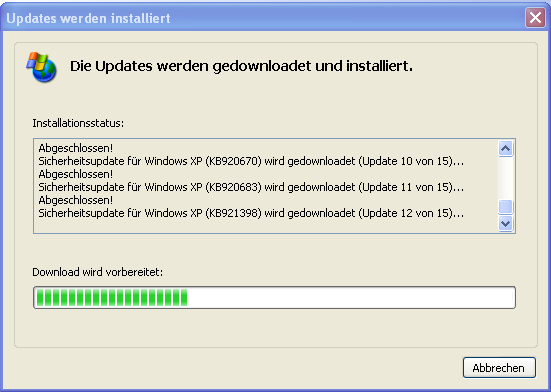 ... klingt irgendwie schon ziemlich scheiße.
Hat was von »geteert und gefedert«. Die armen Updates.
Proudly presented by Windows XP Update.
Quicksearch
About me
You can find my web page with links to my work as a journalist at https://hboeck.de/.
You may also find my newsletter about climate change and decarbonization technologies interesting.
Hanno Böck
mail: hanno@hboeck.de
Hanno on Mastodon
Impressum

You may also find my newsletter about climate change and decarbonization technologies interesting.
Hanno Böck
mail: hanno@hboeck.de
Hanno on Mastodon
Impressum
Creative Commons

Unless noted otherwise, all content is CC Zero / public domain
