Entries tagged as language
asia almaty amusementpark asia2013 aviation azerbaijan baikal beijing belarus berlin border bus capsulehotel caspian ccp censorship childrensday china chinghai cinderella climatechange coach copyright dam disney disneyland dunhuang ecology erenhot erlian fake ferry flying freesoftware greatfirewall guangzhou haikou hainan hohhot hongkong hostel hotel irkutsk journey kazakhstan khorgas kualalumpur laos lenin listwjanka malaysia metro miradormansion mongolia moscow petropavl poland portbaikal publictransport pyramid qwerty rain rainforest russia sanya seat61 shijingshan stepmania suprememaster terracottawarriors thailand tiananmen ticket train tram transport transsib transsiberian travel travelling trip2011 typhoon ulaanbaatar ulan-ude ulanude urumqi vegan vegetarian visa warsaw waterpower weather windenergy xian xinjiang yanoda yekaterinburg yining zamyn-uud zensur babelfish chinese english googletranslate mandarin russian translation universaltranslator boluo boten casino coffee copycat freizeitpark ghosttown hallstatt huizhou journalismus luoyang northwestchina presse pressefreiheit tagesschau diplomathesis rsapss simple thesis upgoerfive words cacert camera canon cryptography csrf email etymologie gadgets gammu gentoo gnokii gphoto josm journalist linux media merkaartor mobile moodle nokia openssl openstreetmap ptp rc2 s9y security serendipity smime ssl time websecurity writing xss ccc easterhegg gsoc licenses mysmartgrid nss pss publicdomain rsa rsaoaep tls arcade computerhistory magistral migrationcard museum retro retrogames tankodrom diploma diplomarbeit university architecture astana baiterek crookedforest forest gryfino khanshatyry migrationpolice nature places
Saturday, January 26. 2013
Explain hard stuff with the 1000 most common words #UPGOERFIVE
Friday, November 9. 2012
Languages and translation technology
 Just recently, Microsoft research has made some progress in developing a device to do live translations from English into Mandarin. I'd like to share some thoughts with you about that.
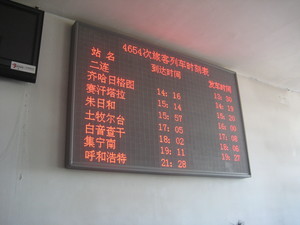
If you read my blog on a regular basis, you will know that I traveled through Russia, Mongolia and China last year. If there's one big thing I learned on this trip, it's this: English language is - on a worldwide scale - much less prevalent than I thought. Call me a fool, but I just wasn't aware of that. I thought, okay, maybe many people won't understand English, but at least I'll always be able to find someone nearby who's able to translate. That just wasn't the case. I spent days in cities where I met nobody that shared any language knowledge with me.
I'm pretty sure that translation technologies will become really important in the not-so-distant future. For many people, they already are. I've learned about the opinions of swedish initiatives without any knowledge of swedish just by using Google translate. Google Chrome and the free variant Chromium show directly the option to send something through Google translate if it detects that it's not in your language (although that wasn't working with Mongolian when I was there last year). I was in hotels where the staff pointed me to their PC with an instance of Yandex translate or Baidu translate where I should type in my questions in English (Yandex is something like the russian Google, Baidu is something like the chinese Google). Despite all the shortcomings of today's translation services, people use them to circumvent language barriers.
Young people in those countries are often learning English today, but it's a matter of fact that this will only very slowly translate into a real change. Lots of barriers exist. Many countries have their own language and another language that's used as the "international communication language" that's not English. For example, you'll probably get along pretty well in most post-soviet countries with Russian, no matter if the countries have their own native language or not. This also happens in single countries with more than one language. People have their native language and learn the countries language as their first foreign language.
Some people think their language is especially important and this stops the adoption of English (France is especially known for that). Some people have the strange idea that supporting English language knowledge is equivalent to supporting US politics and therefore oppose it.
Yes, one can try to learn more languages (I'm trying it with Mandarin myself and if I'll ever feel I can try a fourth language it'll probably be Russian), but if you look on the world scale, it's a loosing battle. To get along worldwide, you'd probably have to learn at least five languages. If you are fluent in English, Mandarin, Russian, Arabic and Spanish, you're probably quite good, but I doubt there are many people on this planet able to do that. If you're one of them, you have my deepest respect (please leave a comment if you are).
If you'd pick two completely random people of the world population, it's quite likely that they don't share a common language.
I see no reason in principle why technology can't solve that. We're probably far away from a StarTrek-alike universal translator and sadly evolution hasn't brought us the Babelfish yet, but I'm pretty confident that we will see rapid improvements in this area and that will change a lot. This may sound somewhat pathetic, but I think this could be a crucial issue in fixing some of the big problems of our world - hate, racism, war. It's just plain simple: If you have friends in China, you're less likely to think that "the chinese people are bad" (I'm using this example because I feel this thought is especially prevalent amongst the left-alternative people who would never admit any racist thoughts - but that's probably a topic for a blog entry on its own). If you have friends in Iran, you're less likely to support your country fighting a war against Iran. But having friends requires being able to communicate with them. Being able to have friends without the necessity of a common language is a fascinating thought to me.
Wednesday, July 13. 2011
Unexpected difficulties on our trip
Quicksearch
About me
You can find my web page with links to my work as a journalist at https://hboeck.de/.
You may also find my newsletter about climate change and decarbonization technologies interesting.
Hanno Böck
mail: hanno@hboeck.de
Hanno on Mastodon
Impressum

You may also find my newsletter about climate change and decarbonization technologies interesting.
Hanno Böck
mail: hanno@hboeck.de
Hanno on Mastodon
Impressum
Creative Commons

Unless noted otherwise, all content is CC Zero / public domain
