Saturday, September 5. 2015
TLS interception considered harmful - video and slides
Saturday, December 20. 2014
Don't update NTP – stop using it
Update: This blogpost was written before NTS was available, and the information is outdated. If you are looking for a modern solution, I recommend using software and a time server with Network Time Security, as specified in RFC 8915.
 tl;dr Several severe vulnerabilities have been found in the time setting software NTP. The Network Time Protocol is not secure anyway due to the lack of a secure authentication mechanism. Better use tlsdate.
Today several severe vulnerabilities in the NTP software were published. On Linux and other Unix systems running the NTP daemon is widespread, so this will likely cause some havoc. I wanted to take this opportunity to argue that I think that NTP has to die.
In the old times before we had the Internet our computers already had an internal clock. It was just up to us to make sure it shows the correct time. These days we have something much more convenient – and less secure. We can set our clocks through the Internet from time servers. This is usually done with NTP.
NTP is pretty old, it was developed in the 80s, Wikipedia says it's one of the oldest Internet protocols in use. The standard NTP protocol has no cryptography (that wasn't really common in the 80s). Anyone can tamper with your NTP requests and send you a wrong time. Is this a problem? It turns out it is. Modern TLS connections increasingly rely on the system time as a part of security concepts. This includes certificate expiration, OCSP revocation checks, HSTS and HPKP. All of these have security considerations that in one way or another expect the time of your system to be correct.
Practical attack against HSTS on Ubuntu
At the Black Hat Europe conference last October in Amsterdam there was a talk presenting a pretty neat attack against HSTS (the background paper is here, unfortunately there seems to be no video of the talk). HSTS is a protocol to prevent so-called SSL-Stripping-Attacks. What does that mean? In many cases a user goes to a web page without specifying the protocol, e. g. he might just type www.example.com in his browser or follow a link from another unencrypted page. To avoid attacks here a web page can signal the browser that it wants to be accessed exclusively through HTTPS for a defined amount of time. TLS security is just an example here, there are probably other security mechanisms that in some way rely on time.
Here's the catch: The defined amount of time depends on a correct time source. On some systems manipulating the time is as easy as running a man in the middle attack on NTP. At the Black Hat talk a live attack against an Ubuntu system was presented. He also published his NTP-MitM-tool called Delorean. Some systems don't allow arbitrary time jumps, so there the attack is not that easy. But the bottom line is: The system time can be important for application security, so it needs to be secure. NTP is not.
Now there is an authenticated version of NTP. It is rarely used, but there's another catch: It has been shown to be insecure and nobody has bothered to fix it yet. There is a pre-shared-key mode that is not completely insecure, but that is not really practical for widespread use. So authenticated NTP won't rescue us. The latest versions of Chrome shows warnings in some situations when a highly implausible time is detected. That's a good move, but it's not a replacement for a secure system time.
There is another problem with NTP and that's the fact that it's using UDP. It can be abused for reflection attacks. UDP has no way of checking that the sender address of a network package is the real sender. Therefore one can abuse UDP services to amplify Denial-of-Service-attacks if there are commands that have a larger reply. It was found that NTP has such a command called monlist that has a large amplification factor and it was widely enabled until recently. Amplification is also a big problem for DNS servers, but that's another toppic.
tlsdate can improve security
While there is no secure dedicated time setting protocol, there is an alternative: TLS. A TLS packet contains a timestamp and that can be used to set your system time. This is kind of a hack. You're taking another protocol that happens to contain information about the time. But it works very well, there's a tool called tlsdate together with a timesetting daemon tlsdated written by Jacob Appelbaum.
There are some potential problems to consider with tlsdate, but none of them is even closely as serious as the problems of NTP. Adam Langley mentions here that using TLS for time setting and verifying the TLS certificate with the current system time is a circularity. However this isn't a problem if the existing system time is at least remotely close to the real time. If using tlsdate gets widespread and people add random servers as their time source strange things may happen. Just imagine server operator A thinks server B is a good time source and server operator B thinks server A is a good time source. Unlikely, but could be a problem. tlsdate defaults to the PTB (Physikalisch-Technische Bundesanstalt) as its default time source, that's an organization running atomic clocks in Germany. I hope they set their server time from the atomic clocks, then everything is fine. Also an issue is that you're delegating your trust to a server operator. Depending on what your attack scenario is that might be a problem. However it is a huge improvement trusting one time source compared to having a completely insecure time source.
So the conclusion is obvious: NTP is insecure, you shouldn't use it. You should use tlsdate instead. Operating systems should replace ntpd or other NTP-based solutions with tlsdated (ChromeOS already does).
(I should point out that the authentication problems have nothing to do with the current vulnerabilities. These are buffer overflows and this can happen in every piece of software. Tlsdate seems pretty secure, it uses seccomp to make exploitability harder. But of course tlsdate can have security vulnerabilities, too.)
Update: Accuracy and TLS 1.3
This blog entry got much more publicity than I expected, I'd like to add a few comments on some feedback I got.
A number of people mentioned the lack of accuracy provided by tlsdate. The TLS timestamp is in seconds, adding some network latency you'll get a worst case inaccuracy of around 1 second, certainly less than two seconds. I can see that this is a problem for some special cases, however it's probably safe to say that for most average use cases an inaccuracy of less than two seconds does not matter. I'd prefer if we had a protocol that is both safe and as accurate as possible, but we don't. I think choosing the secure one is the better default choice.
Then some people pointed out that the timestamp of TLS will likely be removed in TLS 1.3. From a TLS perspective this makes sense. There are already TLS users that randomize the timestamp to avoid leaking the system time (e. g. tor). One of the biggest problems in TLS is that it is too complex so I think every change to remove unneccesary data is good.
For tlsdate this means very little in the short term. We're still struggling to get people to start using TLS 1.2. It will take a very long time until we can fully switch to TLS 1.3 (which will still take some time till it's ready). So for at least a couple of years tlsdate can be used with TLS 1.2.
I think both are valid points and they show that in the long term a better protocol would be desirable. Something like NTP, but with secure authentication. It should be possible to get both: Accuracy and security. With existing protocols and software we can only have either of these - and as said, I'd choose security by default.
I finally wanted to mention that the Linux Foundation is sponsoring some work to create a better NTP implementation and some code was just published. However it seems right now adding authentication to the NTP protocol is not part of their plans.
Update 2:
OpenBSD just came up with a pretty nice solution that combines the security of HTTPS and the accuracy of NTP by using an HTTPS connection to define boundaries for NTP timesetting.
tl;dr Several severe vulnerabilities have been found in the time setting software NTP. The Network Time Protocol is not secure anyway due to the lack of a secure authentication mechanism. Better use tlsdate.Today several severe vulnerabilities in the NTP software were published. On Linux and other Unix systems running the NTP daemon is widespread, so this will likely cause some havoc. I wanted to take this opportunity to argue that I think that NTP has to die.
In the old times before we had the Internet our computers already had an internal clock. It was just up to us to make sure it shows the correct time. These days we have something much more convenient – and less secure. We can set our clocks through the Internet from time servers. This is usually done with NTP.
NTP is pretty old, it was developed in the 80s, Wikipedia says it's one of the oldest Internet protocols in use. The standard NTP protocol has no cryptography (that wasn't really common in the 80s). Anyone can tamper with your NTP requests and send you a wrong time. Is this a problem? It turns out it is. Modern TLS connections increasingly rely on the system time as a part of security concepts. This includes certificate expiration, OCSP revocation checks, HSTS and HPKP. All of these have security considerations that in one way or another expect the time of your system to be correct.
Practical attack against HSTS on Ubuntu
At the Black Hat Europe conference last October in Amsterdam there was a talk presenting a pretty neat attack against HSTS (the background paper is here, unfortunately there seems to be no video of the talk). HSTS is a protocol to prevent so-called SSL-Stripping-Attacks. What does that mean? In many cases a user goes to a web page without specifying the protocol, e. g. he might just type www.example.com in his browser or follow a link from another unencrypted page. To avoid attacks here a web page can signal the browser that it wants to be accessed exclusively through HTTPS for a defined amount of time. TLS security is just an example here, there are probably other security mechanisms that in some way rely on time.
Here's the catch: The defined amount of time depends on a correct time source. On some systems manipulating the time is as easy as running a man in the middle attack on NTP. At the Black Hat talk a live attack against an Ubuntu system was presented. He also published his NTP-MitM-tool called Delorean. Some systems don't allow arbitrary time jumps, so there the attack is not that easy. But the bottom line is: The system time can be important for application security, so it needs to be secure. NTP is not.
Now there is an authenticated version of NTP. It is rarely used, but there's another catch: It has been shown to be insecure and nobody has bothered to fix it yet. There is a pre-shared-key mode that is not completely insecure, but that is not really practical for widespread use. So authenticated NTP won't rescue us. The latest versions of Chrome shows warnings in some situations when a highly implausible time is detected. That's a good move, but it's not a replacement for a secure system time.
There is another problem with NTP and that's the fact that it's using UDP. It can be abused for reflection attacks. UDP has no way of checking that the sender address of a network package is the real sender. Therefore one can abuse UDP services to amplify Denial-of-Service-attacks if there are commands that have a larger reply. It was found that NTP has such a command called monlist that has a large amplification factor and it was widely enabled until recently. Amplification is also a big problem for DNS servers, but that's another toppic.
tlsdate can improve security
While there is no secure dedicated time setting protocol, there is an alternative: TLS. A TLS packet contains a timestamp and that can be used to set your system time. This is kind of a hack. You're taking another protocol that happens to contain information about the time. But it works very well, there's a tool called tlsdate together with a timesetting daemon tlsdated written by Jacob Appelbaum.
There are some potential problems to consider with tlsdate, but none of them is even closely as serious as the problems of NTP. Adam Langley mentions here that using TLS for time setting and verifying the TLS certificate with the current system time is a circularity. However this isn't a problem if the existing system time is at least remotely close to the real time. If using tlsdate gets widespread and people add random servers as their time source strange things may happen. Just imagine server operator A thinks server B is a good time source and server operator B thinks server A is a good time source. Unlikely, but could be a problem. tlsdate defaults to the PTB (Physikalisch-Technische Bundesanstalt) as its default time source, that's an organization running atomic clocks in Germany. I hope they set their server time from the atomic clocks, then everything is fine. Also an issue is that you're delegating your trust to a server operator. Depending on what your attack scenario is that might be a problem. However it is a huge improvement trusting one time source compared to having a completely insecure time source.
So the conclusion is obvious: NTP is insecure, you shouldn't use it. You should use tlsdate instead. Operating systems should replace ntpd or other NTP-based solutions with tlsdated (ChromeOS already does).
(I should point out that the authentication problems have nothing to do with the current vulnerabilities. These are buffer overflows and this can happen in every piece of software. Tlsdate seems pretty secure, it uses seccomp to make exploitability harder. But of course tlsdate can have security vulnerabilities, too.)
Update: Accuracy and TLS 1.3
This blog entry got much more publicity than I expected, I'd like to add a few comments on some feedback I got.
A number of people mentioned the lack of accuracy provided by tlsdate. The TLS timestamp is in seconds, adding some network latency you'll get a worst case inaccuracy of around 1 second, certainly less than two seconds. I can see that this is a problem for some special cases, however it's probably safe to say that for most average use cases an inaccuracy of less than two seconds does not matter. I'd prefer if we had a protocol that is both safe and as accurate as possible, but we don't. I think choosing the secure one is the better default choice.
Then some people pointed out that the timestamp of TLS will likely be removed in TLS 1.3. From a TLS perspective this makes sense. There are already TLS users that randomize the timestamp to avoid leaking the system time (e. g. tor). One of the biggest problems in TLS is that it is too complex so I think every change to remove unneccesary data is good.
For tlsdate this means very little in the short term. We're still struggling to get people to start using TLS 1.2. It will take a very long time until we can fully switch to TLS 1.3 (which will still take some time till it's ready). So for at least a couple of years tlsdate can be used with TLS 1.2.
I think both are valid points and they show that in the long term a better protocol would be desirable. Something like NTP, but with secure authentication. It should be possible to get both: Accuracy and security. With existing protocols and software we can only have either of these - and as said, I'd choose security by default.
I finally wanted to mention that the Linux Foundation is sponsoring some work to create a better NTP implementation and some code was just published. However it seems right now adding authentication to the NTP protocol is not part of their plans.
Update 2:
OpenBSD just came up with a pretty nice solution that combines the security of HTTPS and the accuracy of NTP by using an HTTPS connection to define boundaries for NTP timesetting.
Monday, December 15. 2014
My Last Featurephone and some Random Thoughts about Tech Development
 Yesterday I deleted all the remaining data on my old Nokia 6230i phone with the intent to give it away. It was my last feature phone (i. e. non-smartphone). My first feature phone was an 5130 in the late 90s. It made me think a bit about technology development.
I remember that at some point when I was a kid I asked myself if there are transportable phones. I was told they don't exist (which was not exactly true, but it's safe to say that they weren't widely available). Feature phones were nonexistent when I started to care about tech gadgets and today they're obsolete. (Some might argue that smartphones are the new mobile phones, but I don't think that's accurate. Essentially I think the name smartphone is misleading, because they are multi function devices where the phone functionality is just one – and hardly the most important one.)
I considered whether I should keep it in case my current smartphone breaks or gets lost so I have a quick replacement. However then I thought it would probably not do much good and decided it can go away as long as there are still people who would want to use it (the point where I could sell it has already passed). The reason is that the phone functionality is probably one of the lesser important ones of my smartphone and a feature phone wouldn't do much to help in case I loose it.
Of course feature phones are not the only tech gadgets that raised and became obsolete during my lifetime. CD-ROM drives, MP3 players, Modems, … I recently saw a documetary that was called “80s greatest gadgets” (this seems to be on Youtube, but unfortunately not available depending on your geolocation). I found it striking that almost every device they mentioned can be replaced with a smartphone today.
Something I wondered was what my own expectations of tech development were in the past. Surprisingly I couldn't remember that many. I would really be interested how I would've predicted tech development let's say 10 or 15 years ago and compare it to what really happened. The few things I can remember is that when I first heared about 3D printers I had high hopes (I haven't seen them come true until now) and that I always felt free software will become the norm (which in large parts it did, but certainly not in the way I expected). I'm pretty sure I didn't expected social media and I'm unsure about smartphones.
As I feel it's unfortunate I don't remember what I had expected in the past I thought I could write down some expectations now. I feel drone delivery will likely have an important impact in the upcoming years and push the area of online shopping to a whole new level. I expect the whole area that's today called “sharing economy” to rise and probably crash into much more areas. And I think that at some point robot technology will probably enter our everyday life. Admittedly none of this is completely unexpected but that's not the point.
If you have some interesting thoughts what tech we'll see in the upcoming years feel free to leave a comment.
Image from Rudolf Stricker / Wikimedia Commons
Friday, October 3. 2014
New laptop Lenovo Thinkpad X1 Carbon 20A7
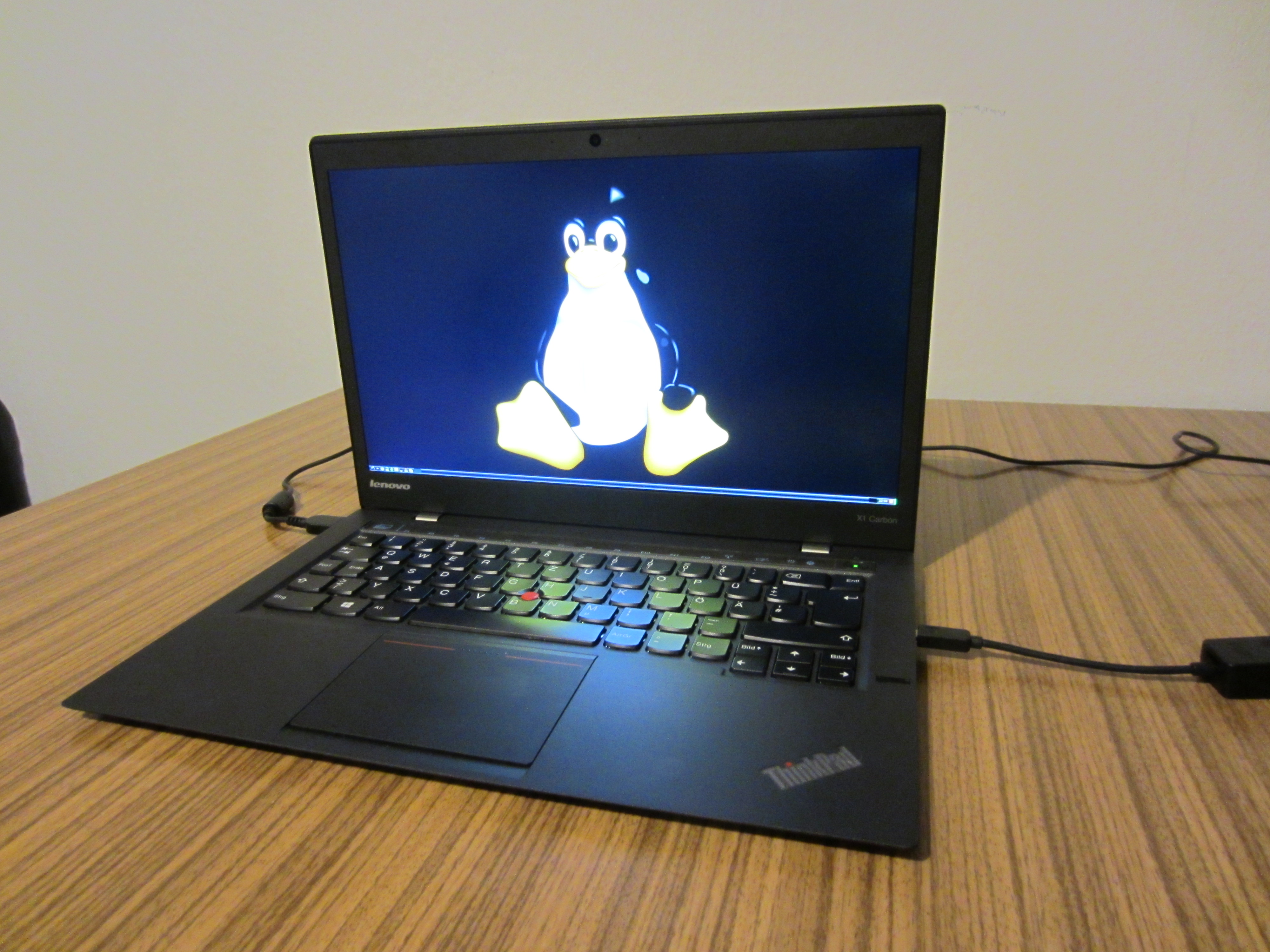 While I got along well with my Thinkpad T61 laptop, for quite some time I had the plan to get a new one soon. It wasn't an easy decision and I looked in detail at the models available in recent months. I finally decided to buy one of Lenovo's Thinkpad X1 Carbon laptops in its 2014 edition. The X1 Carbon was introduced in 2012, however a completely new variant which is very different from the first one was released early 2014. To distinguish it from other models it is the 20A7 model.
Judging from the first days of use I think I made the right decision. I hadn't seen the device before I bought it because it seems rarely shops keep this device in stock. I assume this is due to the relatively high price.
I was a bit worried because Lenovo made some unusual decisions for the keyboard, however having used it for a few days I don't feel that it has any severe downsides. The most unusual thing about it is that it doesn't have normal F1-F12 keys, instead it has what Lenovo calls an adaptive keyboard: A touch sensitive line which can display different kinds of keys. The idea is that different applications can have their own set of special keys there. However, just letting them display the normal F-keys works well and not having "real" keys there doesn't feel like a big disadvantage. Beside that Lenovo removed the Caps lock and placed Pos1/End there, which is a bit unusual but also nothing I worried about. I also hadn't seen any pictures of the German keyboard before I bought the device. The ^/°-key is not where it's used to be (small downside), but the </>/| key is where it belongs(big plus, many laptop vendors get that wrong).
Good things:
* Lightweight, Ultrabook, no unnecessary stuff like CD/DVD drive
* High resolution (2560x1440)
* Hardware is up-to-date (Haswell chipset)
Downsides:
* Due to ultrabook / integrated design easy changing battery, ram or HD
* No SD card reader
* Have some trouble getting used to the touchpad (however there are lots of possibilities to configure it, I assume by playing with it that'll get better)
It used to be the case that people wrote docs how to get all the hardware in a laptop running on Linux which I did my previous laptops. These days this usually boils down to "run a recent Linux distribution with the latest kernels and xorg packages and most things will be fine". However I thought having a central place where I collect relevant information would be nice so I created one again. As usual I'm running Gentoo Linux.
For people who plan to run Linux without a dual boot it may be worth mentioning that there seem to be troublesome errors in earlier versions of the BIOS and the SSD firmware. You may want to update them before removing Windows. On my device they were already up-to-date.
Monday, September 29. 2014
Responsibility in running Internet infrastructure
Tuesday, August 5. 2014
Las Vegas

My hotel looks like a Disneyland castle - just much larger.
Las Vegas is probably a place I would've never visited on its own. I consider myself a rationalist person and therefore I see gambling mostly as an illogical pursuit. In the end your chances of winning are minimal because otherwise the business wouldn't work. I hadn't imagined how huge the casino business in Las Vegas is. Large parts of the city are just one large casino after another - and it doesn't stop there, because a couple of cities around Vegas literally are made of casinos.
Beside seeing some of the usual tourist attractions (Hoover Dam, Lake Mead), I spend the last couple of days also finding out that there are some interesting solar energy projects nearby. Also a large Star Trek convention> was happening the past days where I attended on the last day.

A Nintendo test cardrige at A Gamer's Paradise
Pictures from Las Vegas
Pictures from A Gamer's Paradise
Pictures from Pinball Hall of Fame
Thursday, April 24. 2014
Easterhegg talk on TLS
 Last weekend I was at the Easterhegg in Stuttgart, an event organized by the Chaos Computer Club. I had a talk with the title "How broken is TLS?"
This was quite a lucky topic. I submitted the talk back in January, so I had no idea that the Heartbleed bug would turn up and raise the interest that much. However, it also made me rework large parts of the talk, because after Heartbleed I though I had to get a much broader view on the issues. The slides are here as PDF, here as LaTeX and here on Slideshare.
There's also a video recording here (media.ccc.de) and also on Youtube.
I also had a short lightning talk with some thoughs on paperless life, however it's only in German. Slides are here (PDF), here (LaTeX) and here (Slideshare). (It seems there is no video recording, if it appears later I'll add the link.)
Monday, February 3. 2014
Adblock Plus, Werbung und die Zukunft des Journalismus
 tl;dr Journalismus bangt um seine Finanzierung, aber Werbung nervt. Die Aufmerksamkeit für die Ereignisse um Adblock Plus ist völlig übertrieben. Die Idee der Acceptable Ads ist eigentlich vernünftig, die Medien sollten sie selbst aufgreifen.
In den letzten Tagen macht mal wieder eine Nachricht um den Werbeblocker Adblock Plus die Runde und wird von zahlreichen Medien aufgegriffen. Ich wollte mal meine Meinung dazu aufschreiben, das wird jetzt etwas länger. Vorneweg: Ich fühle mich in gewisser Weise zwischen den Stühlen. Ich verdiene mein Geld überwiegend mit Journalismus, ich kann aber sehr gut nachvollziehen, warum Menschen Adblocker einsetzen.
Die eine Seite: Zukunft des Journalismus
Der Journalismus ist in der Krise, das wissen wir spätestens seit dem Ende von dapd, der Financial Times Deutschland und dem Beinahe-Ende der Frankfurter Rundschau. Viele Menschen machen sich Sorgen um die Zukunft guter Berichterstattung und viele Journalisten machen sich Sorgen um ihren Job. Die Zukunft des Journalismus liegt im Internet, aber es gibt ein Problem: Bisher haben Zeitungen damit Geld verdient, bedrucktes Papier zu verkaufen und dieses Geschäftsmodell erodiert in rapider Geschwindigkeit. Im Internet Geld zu verdienen ist schwer. Es gibt im wesentlichen vier Möglichkeiten, mit Jouranlismus im Netz Geld zu verdienen: Werbung, bezahlte Inhalte, Spenden/Sponsoring und aus Steuern und Gebühren finanzierter Journalismus.
Keine dieser Möglichkeiten funktioniert sonderlich gut. Viele, die gute Inhalte produzieren, haben es verdammt schwer. Viele glauben, dass man die Nutzer nur irgendwann zum Bezahlen von Inhalten „umerziehen“ muss und dann alle ihre Paywalls anschalten, ich halte das aus verschiedenen Gründen für eine Illusion. Von allen Möglichkeiten, Onlinejournalismus zu finanzieren, funktioniert Werbung derzeit am besten. Nicht gut, aber für die meisten besser als alles andere.
Aber das Geschäftsmodell „Werbung“ wird angenagt. Immer mehr Nutzer nutzen Software wie Adblock Plus, ein relativ simpel zu installierendes Browserplugin.
Die andere Seite: Der genervte Nutzer
Wer heute ohne Werbeblocker im Netz surft bekommt den Eindruck die Werbeindustrie hat jedes Maß verloren. Werbung, die Musik abspielt, die wild blinkend um Aufmerksamkeit bettelt, die ihn ausspioniert, die das System auslastet oder die – das kommt immer wieder vor - versucht, Viren auf dem Rechner des Nutzers zu installieren oder ihn auf betrügerische Webangebote weiterleitet.
Die wenigsten installieren sich einen Adblocker leichtfertig. Denn auch das ist nervig und problembehaftet. Ich habe beispielsweise jahrelang ohne Werbeblocker gesurft. Schon lange vor es Adblock Plus überhaupt gab hatte ich mal ein Tool namens Privoxy installiert, es aber nach kurzer Zeit wieder deinstalliert. Jeder Werbeblocker bringt Probleme mit sich: Manche Seiten funktionieren nicht richtig, der Werbeblocker selbst will Speicher und Systemressourcen, kann für Browserabstürze verantwortlich sein und hat möglicherweise Sicherheitslücken. Werbeblocker installiert man sich erst dann, wenn die Nachteile durch Werbung so gravierend sind, dass sie die Nachteile eines Adblockers deutlich aufwiegen.
Diesen Punkt haben wir inzwischen erreicht und er führt dazu, dass gerade auf IT-Webseiten immer mehr Nutzer mit Adblockern unterwegs sind.
Die dritte Seite: Werbung an sich
Es gibt noch eine dritte Perspektive, die hier nicht verschwiegen werden soll und der ich einiges abgewinnen kann: Werbung ist eigentlich – aus gesellschaftlicher Sicht – eine reichlich dumme Angelegenheit. Werbung dient dazu, Menschen zu mehr Konsum zu bewegen. Sie fragt nicht, ob dieser Konsum irgendeinem Zweck dient. Sie bindet unglaubliche Mengen an Ressourcen und menschlicher Kreativität.
Diese Meinung mag nicht jeder im Detail teilen, aber mehr oder weniger denken vermutlich sehr viele Menschen so. Die wenigsten werden sagen: „Werbung ist etwas grundsätzlich tolles und schützenswertes.“ Schützenswert ist vielleicht der von der Werbung finanzierte Journalismus, aber nicht die Werbung selbst. Deswegen hat man auch wenig Hemmungen, Werbung zu blockieren. Man blockiert nichts wertvolles und hat nicht das Gefühl, etwas zu verpassen.
Es ist in gewisser Weise eine Tragik, dass so etwas sinnvolles wie Journalismus (bei aller Kritik im Detail) heute in starkem Maße von so etwas sinnlosem wie Werbung abhängt. Nein, einen einfachen Ausweg habe ich nicht anzubieten. Aber ich denke man muss sich dieses Dilemmas bewusst sein.

mobilegeeks versus Adblock Plus
Eine sehr erfolgreiche Software zum Blocken von Werbung ist das Browserplugin Adblock Plus. Adblock Plus hat vor einiger Zeit ein Programm für sogenannte „akzeptable Werbung“ (Acceptable Ads) eingeführt. Dafür hat Adblock Plus eine Reihe von Regeln, die wenig überraschen. Sie entspricht in vielen Punkten dem, was auch die meisten Nutzer als „akzeptable Werbung“ betrachten würden, etwa das Verbot von Sound in der Werbung oder von Layer Ads. Adblock Plus pflegt eine Whitelist von Seiten, die sie als akzeptabel betrachten und diese werden in der Standardeinstellung nicht blockiert.
Nun nimmt Adblock Plus von manchen Werbebetreibern auch Geld dafür, dass sie vom Werbeblocker ausgenommen werden. Das kann man fragwürdig finden. Der Betreiber der Webseite mobilegeeks Sascha Pallenberg berichtete darüber schon mehrfach, oft in ausgesprochen polemischer Weise („mafiöses Netzwerk“), und hat dabei eine erstaunliche Medienresonanz. Zuletzt berichtete mobilegeeks, dass Google und andere große Unternehmen an Adblock Plus nicht unerhebliche Beträge zahlen, um in die Liste der akzeptablen Werbung aufgenommen zu werden.
Dass eine Software mit Geschäftsmodellen arbeitet, die fragwürdig sind, kommt häufiger vor. Dass einiges von dem, was die Firma hinter Adblock Plus treibt, kritikwürdig ist, will ich nicht bezweifeln. Die gigantische Medienresonanz der Geschichte hat aber einen faden Beigeschmack. Die Süddeutsche, die Welt, die FAZ oder die Neue Züricher Zeitung sind üblicherweise keine Blätter, die besonders ausführlich über Netzthemen berichten oder sich für die Details seltsamer Geschäftsmodelle im Internet interessieren. Die ganze Geschichte wird viel größer gemacht als sie ist.
Der Effekt dürfte bei vielen Nutzern übrigens kaum sein, dass sie künftig ohne Adblocker surfen. Wer Adblock Plus misstraut, wird entweder das Acceptable Ads-Feature abschalten (ist problemlos möglich) oder auf einen alternativen Werbeblocker setzen, der ohne ein solches Feature auskommt (es gibt genügend davon).
Acceptable Ads
Grundsätzlich ist die Idee von Acceptable Ads nicht dumm. Die Medienbranche täte gut daran, die Diskussion darum, was an Werbung akzeptabel ist und was nicht, selbst zu führen. Man könnte sich etwa eine Selbstverpflichtung der Medienbranche ähnlich dem Pressekodex des deutschen Presserats vorstellen. Im Prinzip kommt man immer wieder zu ähnlichen Schlüssen, was akzeptable Werbung ist: Kein Blinken, kein Sound, keine Layer-Ads, kein Flash.
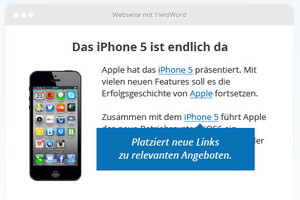
Werbelinks im Text findet Adblock Plus "akzeptabel"
Man kann sich über manche Details sicher streiten. Ob Animationen generell verboten oder im bestimmten Rahmen erlaubt sein sollten etwa, oder ob Flash eine Existenzberechtigung hat. Manche Nutzer finden es spooky, wenn ihnen Werbebanner durchs Netz folgen, andere haben damit kein Problem. Aber es gibt denke ich zwei Punkte bei denen kann man sich nicht streiten: Sicherheit und Systemauslastung.
Adblocker als Schutz vor Malware
Werbung im Netz ist ein Sicherheitsrisiko. Werbeblocker sind eine sinnvolle Maßnahme, die Sicherheit beim Surfen zu erhöhen. Die Situation ist einigermaßen gruselig. Das BSI hat im letzten Jahr zweimal vor Malware in Werbebannern gewarnt. Es ging dabei nicht um die Schmuddelecken des Internets, zahlreiche populäre Webseiten waren betroffen.
Eine beliebte Software zur Verbreitung von Werbung nennt sich OpenX. OpenX hatte in der Vergangenheit immer wieder massive Sicherheitslücken. Im vergangenen Jahr verteilte die offizielle Webseite von OpenX eine gehackte Version mit einer Backdoor. Diese gehackte Version ist extrem verbreitet. Ich betreibe selber Webserver und habe schon mehrere Installationen davon stillgelegt. OpenX wird inzwischen nicht mehr weiterentwickelt, es gibt einen Nachfolger namens Revive, aber http://www.kreativrauschen.com/blog/2013/12/18/zero-day-vulnerability-in-openx-source-2-8-11-and-revive-adserver-3-0-1/ erst im Dezember wurde in Revive eine weitere massive Sicherheitslücke entdeckt.
Das ist nicht akzeptabel. Überhaupt nicht. Ein „wir bemühen uns, dass so etwas nicht vorkommt“ reicht nicht. Dafür kommt es viel zu oft vor. Ich möchte wissen, welche Strategie die Werbebranche hat, so etwas abzustellen. Ich möchte von den werbenden Webseiten, die mich darum bitten, meinen Adblocker abzuschalten, wissen, welche Software ihre Werbepartner einsetzen, denen sie immerhin die Sicherheit ihrer Kunden anvertrauen. Ich möchte wissen, warum noch niemand einen professionellen Audit von Revive organisiert hat oder Bug-Bounties bezahlt. Solange die Branche dieses Problem nicht soweit im Griff hat, dass das Risiko geringer ist als sich durch den Werbeblocker Sicherheitsprobleme einzuhandeln, werde ich weiterhin jedem, der mich um seine Meinung fragt (und das sind in Sachen PC-Sicherheit ein paar) sagen, dass Adblocker eine effektive Maßnahme zu mehr Sicherheit im Netz sind.

Flash-Banner treiben CPU-Last nach oben
Kommen wir zum Thema Systemlast. Werbung benötigt Rechenpower. Nicht ein bisschen, sondern ganz erheblich. Als es zuletzt mal wieder eine Kampagne von verschiedenen Medien mit der Nachricht „schaltet doch bitte Eure Adblocker aus“ gab, habe ich testweise die Seiten der beteiligten Medien mit Firefox und ohne Werbeblocker aufgerufen. Das Ergebnis war beeindruckend. Auf allen Seiten schnellte die Systemlast nach oben, in top (ein Tool unter Linux zum Anzeigen der Systemauslastung) waren abwechselnd Firefox und das Flash-Plugin ganz oben und benötigten über 50 Prozent der CPU-Leistung.
Ich habe dazu nur eine Frage: Wenn ihr schreibt „Bitte schaltet den Adblocker aus“ - meint ihr wirklich, dass sich eure Besucher deswegen einen schnelleren PC kaufen?
(Hinweis am Rande: Ich weiß, dass das Problem mit der CPU-Last unter Linux verstärkt auftritt, weil der Flash-Player für Linux so schlecht ist. Aber nein, das ist keine Entschuldigung.)
Ein Allmendeproblem
Nachdem ich gestern noch eine Weile über die Sache nachgedacht hab, ist mir ein offensichtliches Problem aufgefallen: Einzelne Nachrichtenwebseiten können vermutlich kaum etwas ausrichten. Werbeblocker deinstallieren werden die Nutzer nicht, wenn eine einzelne Webseite aufhört, nervige Werbung zu schalten. Die Nutzer darum zu bitten, ihren Werbeblocker auf einzelnen Webseiten auszuschalten, funktioniert vermutlich nur in sehr begrenztem Umfang.
Deswegen: Wenn einzelne, kleinere Webangebote voranpreschen und besonders nervige Werbeformen ausschließen, ist das löblich, es wird ihnen aber vermutlich wenig gedankt – ein klassisches Allmendeproblem. Das ganze müsste eine Debatte der Branche sein. Ein guter Anfang wäre es, wenn all diejenigen, die zuletzt entsprechende Appelle an ihre Besucher gestartet haben, sich auf eine Art Kodex einigen würden. Da wäre schon ein relevanter Anteil der deutschsprachigen Nachrichtenwelt zusammen.
Datenschutz
Was ich bis jetzt nur am Rande gestreift habe: Das Thema Datenschutz. Nicht weil ich es vergessen habe, sondern weil ich das Gefühl hatte es verkompliziert die ganze Debatte noch enorm. Werbung wird heute fast immer nicht über die jeweilige Seite selbst sondern über externe Vermarkter ausgeliefert. Das bedeutet automatisch: Der Werbevermarkter bekommt nicht nur Aufmerksamkeit, sondern auch Daten. Dazu kommen noch zahlreiche Services, die ausschließlich Daten abgreifen und für den Nutzer komplett unsichtbar sind. Nicht wenige davon sind gerade für journalistische Angebote kaum verzichtbar, etwa die Zählpixel der VG Wort oder die Statistiken der IVW. Das darf aber nicht darüber hinwegtäuschen: Gerade diese Services dürften inzwischen ein enormes Datenmaterial mit großen Missbrauchspotential haben.
Fazit
Werbung ist doof, aber sie wird auf absehbare Zeit ein wichtiges finanzielles Standbein des Journalismus bleiben. Wenn ihr wollt, dass die Leute aufhören, Adblocker einzusetzen: Macht Werbung erträglich. Dann wird die Rate derer, die sich Werbeblocker installieren, ganz von selbst zurückgehen. Ja, das bedeutet Konflikte mit den Werbevermarktern. Ja, ihr müsst denen erklären, dass Flash doof ist und dass ihr es Euren Nutzern nicht zumuten könnt, wegen ihrer Banner neue Rechner zu kaufen. Nein, von dem Werbebetreiber, der letzten Monat einen Virus verbreitet hat, solltet ihr keine Werbebanner schalten. Ja, es kann dazu führen, dass ihr kurzfristig finanziell lukrative Werbung nicht mehr schalten könnt.
Disclaimer / conflict of interest: Ich benutze auf diesem Blog Google Ads. Google scheint die einzige Firma zu sein, die richtig viel Geld mit Werbung verdient und trotzdem in der Regel das tut, was die meisten als akzeptable Werbung ansehen (mit der großen Ausnahme Datenschutz). Außerdem benutze ich Zählpixel der VG Wort und einen flattr-Button. Ich schreibe regelmäßig Texte für die IT-Nachrichtenseite Golem.de, die an einer der jüngsten Kampagnen zum Thema Adblocker beteiligt war.
Bildquellen: Leuchtreklame von Wikimedia Commons (Public Domain), restliche Bilder Screenshots.
Thursday, January 23. 2014
BSI-Botnetz mit uralten Daten
Das Bundesamt für Sicherheit in der Informationstechnik (BSI) macht ja seit vorgestern mächtig Wirbel um einige Zugangsdaten, die sie angeblich aus einem Botnetz haben. Leider informiert das BSI bislang nur sehr spärlich über Details. Ich habe, nachdem die zugehörige Webseite nach einigen Stunden wieder einigermaßen erreichbar war, verschiedene von mir in der Vergangenheit genutzte Mailadressen prüfen lassen. Bei einer Mailadresse eines großen deutschen Freemail-Anbieters, die ich vor langer Zeit als primäre Mailadresse genutzt hatte, schlug der Test an und ich bekam eine der Warnmails (ich dokumentiere die Mail weiter unten). Das ist jetzt aus zwei Gründen interessant:
1. Ich habe diese Mailadresse seit ungefähr zehn Jahren nicht genutzt. Ich habe alle Accounts, die ich aktiv nutze, auf meine aktuelle Mailadresse auf eigener Domain umgestellt. Das bedeutet: Die Daten, die das BSI da hat, sind also - zumindest teilweise - uralt.
Eine Sache, die hier vielleicht spannend ist: Im November letztes Jahr gab es einen größeren Leak von Accountdaten bei Adobe. Da war ein Account mit dieser Mailadresse dabei (fragt mich nicht warum ich irgendwann einen Adobe-Account hatte, wie gesagt, ist mindestens zehn Jahre her). Es ist natürlich reine Spekulation, aber es scheint mir zumindest vorstellbar, dass es sich bei den BSI-Daten schlicht um die selben Daten handelt. Rein zeitlich würde es ins Bild passen. (Update: Mehrere Leute teilten mir mit dass sie vom Adobe-Leak betroffene Mailadressen haben, die das BSI nicht kennt, also Spekulation höchstwahrscheinlich falsch)
2. Ich erhalte hier eigentlich eine völlig nutzlose Warnung und unpraktikable Tipps. Denn was mir das BSI letztendlich mitteilt: Sie haben Zugangsdaten zu irgendeinem Account irgendwo im Zusammenhang mit einer Mailadresse von mir. Oder, um das BSI zu zitieren: "Dieses Konto verwenden Sie möglicherweise bei einem Sozialen Netzwerk, einem Online-Shop, einem E-Mail-Dienst, beim Online-Banking oder einem anderen Internet-Dienst."
Verbunden ist das ganze mit dem kaum umsetzbaren Vorschlag, ich solle doch am besten alle meine Passwörter ändern.
Was ich ja jetzt gern wüsste: Weiß das BSI, um was für einen Account es geht? Und falls ja: Warum teilen sie es mir nicht mit? Ich werde zumindest versuchen, darauf eine Antwort zu erhalten. Laut Bundesdatenschutzgesetz ist das BSI verpflichtet, mir Auskünfte über Daten, die sie über mich gespeichert haben, zu erteilen.
Hier die vollständige Mail, die man vom BSI erhält:
Sehr geehrte Dame, sehr geehrter Herr,
Sie haben diese E-Mail erhalten, weil die E-Mail-Adresse [...] auf der Webseite www.sicherheitstest.bsi.de eingegeben und überprüft wurde.
Die von Ihnen angegebene E-Mail-Adresse [...] wurde zusammen mit dem Kennwort eines mit dieser E-Mail-Adresse verknüpften Online-Kontos von kriminellen Botnetzbetreibern gespeichert. Dieses Konto verwenden Sie möglicherweise bei einem Sozialen Netzwerk, einem Online-Shop, einem E-Mail-Dienst, beim Online-Banking oder einem anderen Internet-Dienst.
Um diesen Missbrauch zukünftig zu verhindern, empfiehlt das BSI die folgenden Schritte:
1. Überprüfen Sie Ihren eigenen Rechner sowie weitere Rechner, mit denen Sie ins Internet gehen, mittels eines gängigen Virenschutzprogramms auf Befall mit Schadsoftware.
2. Ändern Sie alle Passwörter, die Sie zur Anmeldung bei Online-Diensten nutzen.
3. Lesen Sie die weiteren Informationen hierzu unter www.sicherheitstest.bsi.de.
Diese E-Mail ist vom BSI signiert. Wie Sie die Signatur überprüfen können erfahren Sie auch unter www.sicherheitstest.bsi.de.
Mit freundlichen Grüßen
Ihr BSI-Sicherheitstest-Team
1. Ich habe diese Mailadresse seit ungefähr zehn Jahren nicht genutzt. Ich habe alle Accounts, die ich aktiv nutze, auf meine aktuelle Mailadresse auf eigener Domain umgestellt. Das bedeutet: Die Daten, die das BSI da hat, sind also - zumindest teilweise - uralt.
Eine Sache, die hier vielleicht spannend ist: Im November letztes Jahr gab es einen größeren Leak von Accountdaten bei Adobe. Da war ein Account mit dieser Mailadresse dabei (fragt mich nicht warum ich irgendwann einen Adobe-Account hatte, wie gesagt, ist mindestens zehn Jahre her). Es ist natürlich reine Spekulation, aber es scheint mir zumindest vorstellbar, dass es sich bei den BSI-Daten schlicht um die selben Daten handelt. Rein zeitlich würde es ins Bild passen. (Update: Mehrere Leute teilten mir mit dass sie vom Adobe-Leak betroffene Mailadressen haben, die das BSI nicht kennt, also Spekulation höchstwahrscheinlich falsch)
2. Ich erhalte hier eigentlich eine völlig nutzlose Warnung und unpraktikable Tipps. Denn was mir das BSI letztendlich mitteilt: Sie haben Zugangsdaten zu irgendeinem Account irgendwo im Zusammenhang mit einer Mailadresse von mir. Oder, um das BSI zu zitieren: "Dieses Konto verwenden Sie möglicherweise bei einem Sozialen Netzwerk, einem Online-Shop, einem E-Mail-Dienst, beim Online-Banking oder einem anderen Internet-Dienst."
Verbunden ist das ganze mit dem kaum umsetzbaren Vorschlag, ich solle doch am besten alle meine Passwörter ändern.
Was ich ja jetzt gern wüsste: Weiß das BSI, um was für einen Account es geht? Und falls ja: Warum teilen sie es mir nicht mit? Ich werde zumindest versuchen, darauf eine Antwort zu erhalten. Laut Bundesdatenschutzgesetz ist das BSI verpflichtet, mir Auskünfte über Daten, die sie über mich gespeichert haben, zu erteilen.
Hier die vollständige Mail, die man vom BSI erhält:
Sehr geehrte Dame, sehr geehrter Herr,
Sie haben diese E-Mail erhalten, weil die E-Mail-Adresse [...] auf der Webseite www.sicherheitstest.bsi.de eingegeben und überprüft wurde.
Die von Ihnen angegebene E-Mail-Adresse [...] wurde zusammen mit dem Kennwort eines mit dieser E-Mail-Adresse verknüpften Online-Kontos von kriminellen Botnetzbetreibern gespeichert. Dieses Konto verwenden Sie möglicherweise bei einem Sozialen Netzwerk, einem Online-Shop, einem E-Mail-Dienst, beim Online-Banking oder einem anderen Internet-Dienst.
Um diesen Missbrauch zukünftig zu verhindern, empfiehlt das BSI die folgenden Schritte:
1. Überprüfen Sie Ihren eigenen Rechner sowie weitere Rechner, mit denen Sie ins Internet gehen, mittels eines gängigen Virenschutzprogramms auf Befall mit Schadsoftware.
2. Ändern Sie alle Passwörter, die Sie zur Anmeldung bei Online-Diensten nutzen.
3. Lesen Sie die weiteren Informationen hierzu unter www.sicherheitstest.bsi.de.
Diese E-Mail ist vom BSI signiert. Wie Sie die Signatur überprüfen können erfahren Sie auch unter www.sicherheitstest.bsi.de.
Mit freundlichen Grüßen
Ihr BSI-Sicherheitstest-Team
Friday, November 15. 2013
Moscow and the Museum of Soviet Arcade Machines
 I had about six hours time in Moscow before entering my next train. A bit too much time for getting from one train station to another, eating and sitting around. So I looked for something to do while being in Moscow. I already visited the basic sights like the Red Square last time I was in Moscow, so I was looking for something more unusual.
I checked the Wikivoyage page of Moscow and one of the first things it mentions is the Museum of Soviet Arcade Machines. That sounded like it's worth a visit. I checked the location and it is quite centrally located, only a few minutes walk from the Metro station Baumanskaya. (If you exit the metro, you're already on Baumanskaya street and the Museum is in Baumanskaya street 11.)
As the name says, the museum features arcade machines from the soviet aera. You get a couple of real soviet 15 Kopek coins when entering that you can spend on playing. So I played some rounds of Magistral (Магистраль) - seems something like the soviet answer to Pacman - and others. Honestly, for many of the games I failed to understand how they were supposed to be played. What was interesting that there were a couple of "games" that featured non-virtual content. For example, there was a game where you could control a little toy tank called Tankodrom (танкодром), but I didn't really understand how to play that game either. Obviously there were quite a number of games with cold war references. The Museum also includes some tables where you can have a coffee after playing. If you ever happen to be in Saint-Petersburg, the museum has a branch there, too.
After that I went to Kazansky railway station where my next train was leaving. Moscow has several train stations and some of them are named after the countries where their international trains are heading. So for me that meant I entered Moscow at the Belorussky railway station (because I came through Belarus) and I left at Kazansky railway station (because I was heading to Kazakhstan). (someone in the comments told me this is wrong and Kazaksny station refers to the city Kazan - so I was probably wrong on this naming)
Pictures from the Museum of Soviet Arcade Machines in Moscow
Thursday, September 19. 2013
Improved SSD performance on old Thinkpads with BIOS mod
Wednesday, September 4. 2013
My AC100 travel laptop
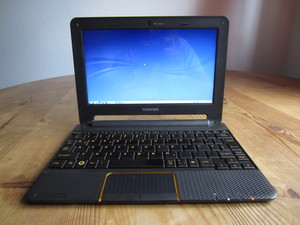 I recently noted that I have never blogged about this nice little device I now own for a couple of years. I originally bought the Toshiba AC100 before a two-month-long trip through Russia and China.
I was looking for a possibility to have a basic laptop, but without much weight. The AC100 is an ARM-based laptop which originally ships with the Android operating system. It weights less than 800 gramms and thus is lighter than the usual subnotebooks. According to my knowledge, it's not produced any more, but it can still be bought on ebay.
The nice thing is: You can install Linux on it and thus it will give you the possibility to run an almost full desktop-system. Though a warning ahead: While basic things work, it is quite a hacky business and you should expect to see problems. If you aren't prepared to solve them, this is probably not the solution for you.
Originally I was running Gentoo Linux on it (and it did well on my two-month trip), but now I'm running Ubuntu. The reason is that it was just too hard to get anything fixed if it didn't work. I rarely could find help anywhere, I assume there are only a handful of people that ever tried installing Gentoo on this Device. Ubuntu up until version 12.10 has reasonable support.
The great thing is: This is probably one of the lightest solutions to have a desktop/laptop-like machine with a real keyboard. Perfect for travelling. As it's running Linux, you can have access to a large number of standard applications. With lightweight apps like Abiword or Claws-Mail you can use basic applications.
The limitations are the Browser and Video. You can run Chromium or Firefox, but the device clearly shows its limits. Expect to wait longer sometimes, don't open too many tabs - and I always have to remember to never try to open Chromium and Firefox at the same time, as this makes the system mostly unusable. Obviously there's no Flash and nothing else that's only available in binary form, because ARM Linux is such a niche OS that nobody will provide binary apps for it.
Videos work, but limited. There's no xv support in the free driver. That means if you want to upscale a video to fullscreen, this has to be done in software and that usually means you cannot play videos fast enough. There's a binary graphics driver by Nvidia (the internals of the device are based on the Nvidia Tegra chipset), but I haven't had much success with it.
Tuesday, March 5. 2013
Questioning copyright treaties
Saturday, January 19. 2013
How to configure your HTTPS server
Friday, November 9. 2012
Languages and translation technology
 Just recently, Microsoft research has made some progress in developing a device to do live translations from English into Mandarin. I'd like to share some thoughts with you about that.
If you read my blog on a regular basis, you will know that I traveled through Russia, Mongolia and China last year. If there's one big thing I learned on this trip, it's this: English language is - on a worldwide scale - much less prevalent than I thought. Call me a fool, but I just wasn't aware of that. I thought, okay, maybe many people won't understand English, but at least I'll always be able to find someone nearby who's able to translate. That just wasn't the case. I spent days in cities where I met nobody that shared any language knowledge with me.
I'm pretty sure that translation technologies will become really important in the not-so-distant future. For many people, they already are. I've learned about the opinions of swedish initiatives without any knowledge of swedish just by using Google translate. Google Chrome and the free variant Chromium show directly the option to send something through Google translate if it detects that it's not in your language (although that wasn't working with Mongolian when I was there last year). I was in hotels where the staff pointed me to their PC with an instance of Yandex translate or Baidu translate where I should type in my questions in English (Yandex is something like the russian Google, Baidu is something like the chinese Google). Despite all the shortcomings of today's translation services, people use them to circumvent language barriers.
Young people in those countries are often learning English today, but it's a matter of fact that this will only very slowly translate into a real change. Lots of barriers exist. Many countries have their own language and another language that's used as the "international communication language" that's not English. For example, you'll probably get along pretty well in most post-soviet countries with Russian, no matter if the countries have their own native language or not. This also happens in single countries with more than one language. People have their native language and learn the countries language as their first foreign language.
Some people think their language is especially important and this stops the adoption of English (France is especially known for that). Some people have the strange idea that supporting English language knowledge is equivalent to supporting US politics and therefore oppose it.
Yes, one can try to learn more languages (I'm trying it with Mandarin myself and if I'll ever feel I can try a fourth language it'll probably be Russian), but if you look on the world scale, it's a loosing battle. To get along worldwide, you'd probably have to learn at least five languages. If you are fluent in English, Mandarin, Russian, Arabic and Spanish, you're probably quite good, but I doubt there are many people on this planet able to do that. If you're one of them, you have my deepest respect (please leave a comment if you are).
If you'd pick two completely random people of the world population, it's quite likely that they don't share a common language.
I see no reason in principle why technology can't solve that. We're probably far away from a StarTrek-alike universal translator and sadly evolution hasn't brought us the Babelfish yet, but I'm pretty confident that we will see rapid improvements in this area and that will change a lot. This may sound somewhat pathetic, but I think this could be a crucial issue in fixing some of the big problems of our world - hate, racism, war. It's just plain simple: If you have friends in China, you're less likely to think that "the chinese people are bad" (I'm using this example because I feel this thought is especially prevalent amongst the left-alternative people who would never admit any racist thoughts - but that's probably a topic for a blog entry on its own). If you have friends in Iran, you're less likely to support your country fighting a war against Iran. But having friends requires being able to communicate with them. Being able to have friends without the necessity of a common language is a fascinating thought to me.
Quicksearch
About me
You can find my web page with links to my work as a journalist at https://hboeck.de/.
You may also find my newsletter about climate change and decarbonization technologies interesting.
Hanno Böck
mail: hanno@hboeck.de
Hanno on Mastodon
Impressum

You may also find my newsletter about climate change and decarbonization technologies interesting.
Hanno Böck
mail: hanno@hboeck.de
Hanno on Mastodon
Impressum
Creative Commons

Unless noted otherwise, all content is CC Zero / public domain


