Entries tagged as fsfe
27c3 berlin cellular freesoftware frequency gsm lessig mobilephones openbsc openbts osmocombb privacy security wiretapping adobe botnetz bsi evince flash kpdf leak marketing okular password passwort pdf poppler schlangenöl sicherheit snakeoil sumatrapdf zugangsdaten 129a 1mai 23c3 24c3 a100 abgeordnetenhaus akongress akw allianz almaty anarchiekongress antiatom asia asia2013 atheismus atomkraft autobahn bahnhof belene bild brandenburg bundestagunited bus buskampagne bz ccc china compiz copyright creativecommons dataretention datenschutz demonstration dose elephantsdream energie energietisch energiewende erlian freeculture freedomnotfear freifunk freiheitstattangst frequencies gott informationsfreiheit itu journey jugendumweltbewegung jukss kamera kameraüberwachung kazakhstan kernkraft klima klimaschutz klimawandel kohle kohlekraft kongress königswusterhausen kyoto linux mcplanet moleculeman moscow musik ökologie ökostrom openstreetmap osm papst peterschaar petropavl piratenpartei poland polizeigewalt preise privatsphäre ratzinger re-publica re-publica09 religion rp09 rwe science sony springer strom stromnetz tagebaue taz theory thermen topberlin train transsiberian travel travelling treptow tuberlin überwachung ubuntu umwelt umweltschutz unserwasser urgewald verkehr videoüberwachung volksbegehren vorratsdatenspeicherung wahl warsaw wasser wg wiki windowsxp wirklimaretter wos wos4 yining youtube zensur zimmer 3d 3ddrucker amusementpark ati backnang base64 bash beijing beryl bios blob bonn bufferoverflow camera canon chdk chemnitz chromium cinderella cinelerra clt code codecs compizfusion composite compression console csrf css cve ddwrt debian desktop developingworld digitalcamera disney disneyland driver dvd eltorito exe fake ffmpeg film firefox firmware france freewvs freiegesellschaft froscon froscon2007 fsf gaia games gargoyle gentoo ghost gimp glibc gnome google googleearth graphics grub hardware heartbleed homebrew ibm ico icons icoutils iso ixus karlsruhe kde laptop lenovo license lpi lpic lspci lsusb lug memdisk messe microsoft movie nancy nessus nouveau nvidia olpc openexpo opengl opensourceexpo openssl openvas pciids phoronix php presse rapidprototyping rar realmedia realvideo redhat reprap retrogames reverseengineering rmll router rv30 rv40 s9y sciencefiction script serendipity sfd shellshock shijingshan siegburg simcity society softwarefreedomday sqlinjection stepmania sunras syslinux talk thesource theunarchiver thinkpad trip2011 tuxmas unar usbids video videoediting vulnerability web wii wiibrew windows windowsrefund wrestool xorg xss lightwerk patents softwarepatents stallman stuttgart agb antigenozidbewegung aok bahn bundestag bundesverfassungsgericht c4 cctv cryptography datamining db diy einkaufen email encryption entropia frankfurt gnupg gpg gpn gpn7 hausdurchsuchung humanistischeunion ice innenpolitik justiz key köln mobil optoutday pgp rechtsbeugung rfid richtervorbehalt schlüssel sha1 sha2 steuerid steuernummer surveillance überwachungskameras verschlüsselung 0days addresssanitizer adguard aead aes afra aiglx algorithm altushost android antivir antivirus apache apt asan auskunftsanspruch axfr azure barcamp berserk bias bigbluebutton bleichenbacher blog bodensee braunschweig browser bsideshn bugbounty bundesdatenschutzgesetz bundestrojaner busby bypass c ca cacert cbc cccamp11 certificate cfb chcounter chrome clamav clang clickjacking cloudflare cmi cms conflictofinterest cookie crash crypto darmstadt deb dell deolalikar diffiehellman dingens diploma diplomarbeit distributions dns domain drupal easterhegg edellroot eff english eplus facebook fedora fileexfiltration firewall forwardsecrecy freak ftp fuzzing gajim gallery gcc git gnutls gobi gsoc gstreamer hackerone hacking hannover hash helma http https infoleak informationdisclosure internetscan ircbot itsecurity jabber javascript jodconverter joomla kaspersky keyexchange komodia libreoffice luckythirteen malware maninthemiddle mantis math md5 memorysafety mephisto milleniumproblems mitm modulobias moodle mozilla mpaa mplayer mrmcd mrmcd100b mrmcd101b multimedia mysql napster netfiltersdk newspaper nist nss ntp ntpd observatory onlinedurchsuchung openleaks openpgp otr owncloud packagemanagement padding panda papierlos passwordalert passwörter pdo phishing pnp poodle privdog protocolfilters provablesecurity pss python rand random rc2 rhein rpm rsa rsapss rss salinecourier server session sha256 sha512 shellbot signatures slides smime snallygaster sni sniffing spam squirrelmail ssl staatsanwaltschaft stacktrace study subdomain superfish support thesis tls tlsdate toendacms transvalid unicef unicode update updates useafterfree userdir utf-8 virus vlc vortrag vulnerabilities webapps webmontag websecurity wiesbaden wordpress x509 xgl xine xmpp xsa zerodays zzuf
Friday, December 10. 2010
Notes from talk about GSM and free software
Wednesday, December 17. 2008
Interview on FSFE webpage
Saturday, December 13. 2008
A critique on the FSFE campaign on PDF readers
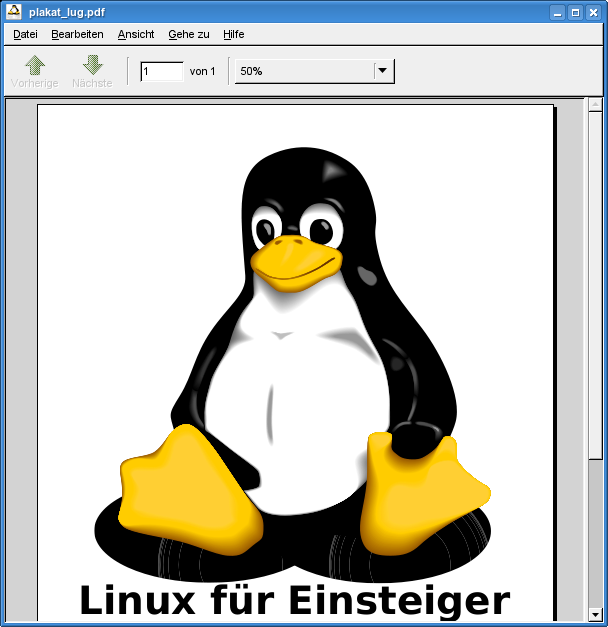 The Free Software Foundation Europe has recently started a campaign promoting free PDF readers. The idea is to replace the tons of »Get Adobe Reader to view the PDF«-Buttons with ones that don't promote a proprietary product for viewing PDFs. On the page, they list a couple of free PDF readers for various operating systems.
While I fully support the intention of this campaign, I think there's a big strategic misconception. As a small sample, let's take this PDF (an old advertisement for a Linux installation party). It's created with Scribus, based on a transparent SVG tux image I got from Wikipedia. On the right, you can see the PDF rendered with Evince (one of the three Linux-based solutions listed there). The others (kpdf and okular), although based on the same poppler-libarary, show a different rendering, though it's not better.
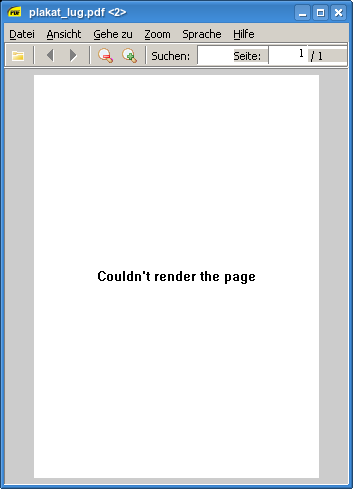 Loading the same PDF in the only listed Windows program SumatraPDF (which will, sad but true, probably the one most people will look for) gives an even more interesting result (see on the left). Though, after resizing the window, it changes it's opinion and renders the PDF, although still broken as you can see on the right (results may be false as I only tried it in WINE).
Continuing with the problems, SumatraPDF is unable to fill in PDF forms. Luckily today Linux-based PDF readers are able to do that, though one of the listed programs (kpdf) is not.
 In fact, those are no reasons not to start a campaign for free PDF readers. But it should start with a completely different focus, like »we have some coders wanting to improve free PDF readers, send us your wrong rendered PDFs« or something like that. And then start improving the free PDF readers. And then promote them. Doing it the other way round with a »there is no problem, just take a free PDF reader« message and then giving them ones with grave problems is just lying to people. There's a good reason why for example the Scribus project promotes the Adobe Reader.
Oh, and before you ask, yes, I have reported the bug about the misrendered transparency a long time ago.
Quicksearch
About me
You can find my web page with links to my work as a journalist at https://hboeck.de/.
You may also find my newsletter about climate change and decarbonization technologies interesting.
Hanno Böck
mail: hanno@hboeck.de
Hanno on Mastodon
Impressum

You may also find my newsletter about climate change and decarbonization technologies interesting.
Hanno Böck
mail: hanno@hboeck.de
Hanno on Mastodon
Impressum
Creative Commons

Unless noted otherwise, all content is CC Zero / public domain
